Source rechargeable foldable mini usb fan for Office, Travel, and Home
Explore 30 options for the rechargeable foldable mini usb fan with varying battery capacities, materials, and delivery times. Buyers can compare specifications like power output, charging ports, and noise levels to find the right supplier for household or portable cooling needs.
Key considerations
Products List




Comprehensive Sourcing Guide
Strategic Sourcing Guide for Rechargeable Foldable Mini USB Fans
Understanding Technical Specifications and Performance Metrics
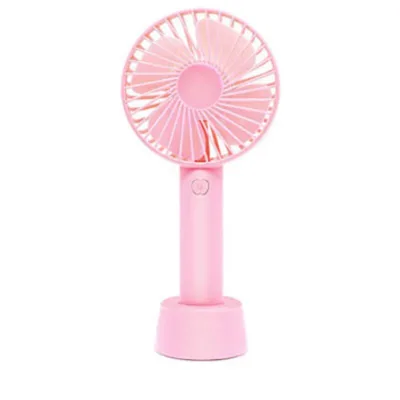
When sourcing rechargeable foldable mini USB fans, buyers must first establish a clear understanding of the technical parameters that define product viability. The core functionality of these devices relies on a balance between portability, power capacity, and airflow efficiency. Based on available product data, the material composition is a critical starting point. Most units in this category utilize a combination of ABS and PP plastics, or simply ABS, to ensure durability while maintaining a lightweight profile. The weight of the finished product, including packaging, typically ranges around 115 grams for the unit itself, though specific models may vary, with some net weights reaching 222 grams depending on the inclusion of accessories like lanyards or charging cables.
Power consumption and battery capacity are the primary drivers of operational time. The observed power input for these devices is generally standardized at 5V/1A, with an output power rating often cited around 5W. The motor speed is a key performance indicator, with high-speed motors capable of reaching 7200 RPM being a common specification for effective air cooling. However, the actual runtime is dictated by the battery capacity, which varies significantly across different models. Data indicates battery capacities ranging from 500mAh to 2400mAh. This variance directly impacts the usage time, which is observed to fall between 2 to 7 hours on a single charge. Buyers should verify the specific battery capacity against their intended usage duration, as a 500mAh unit will offer significantly less runtime than a 2400mAh counterpart.
Charging infrastructure is another essential technical aspect. The majority of modern units in this segment utilize a Type-C charging port, reflecting the industry shift toward universal connectivity. The charging time is typically observed at approximately 3 hours, though this can depend on the specific power adapter used. The physical dimensions of the product are equally important for the "foldable" and "mini" descriptors. Standard product dimensions for these units often measure around 6060180mm, while packaging dimensions can be larger, such as 7065186mm. Carton dimensions for bulk shipping are also critical for logistics planning, with standard cartons measuring approximately 42.53539cm, often containing 60 pieces per carton.
Compliance and Certification Verification
In the global B2B market, compliance is not merely a formality but a prerequisite for market access. For rechargeable mini fans, the electrical and safety standards are paramount. The observed product data consistently lists CE, FCC, and RoHS certifications. These certifications indicate that the product meets specific European Union safety, health, and environmental protection requirements (CE), operates without causing excessive electromagnetic interference (FCC), and complies with restrictions on hazardous substances (RoHS).
Buyers must treat these certifications as verification points rather than automatic guarantees. While the data suggests these certifications are present, the procurement process requires requesting valid test reports and certificates of conformity from the supplier. The presence of a CE mark, for instance, implies the manufacturer has undergone a conformity assessment procedure. However, buyers should verify that the certification covers the specific model number being purchased, as manufacturers often hold broad certifications that may not apply to every variant in a product line. The standard for electrical safety and electromagnetic compatibility should be cross-referenced with the target market's regulations. For example, if selling in the United States, the FCC ID must be valid and traceable. In the European market, the CE marking must be accompanied by a Declaration of Conformity.
Additionally, the material composition, specifically the use of ABS and PP plastics, should be verified against RoHS compliance to ensure no restricted substances like lead or mercury are present in the plastic casing or internal components. The battery capacity and chemistry also fall under safety regulations, particularly regarding lithium-ion battery transport and safety standards. Buyers should ensure the supplier provides documentation confirming that the battery cells meet relevant safety standards for transport, such as UN38.3, even if not explicitly listed in the initial product summary.
Cost Drivers and Pricing Dynamics
The pricing of rechargeable foldable mini USB fans is influenced by a complex interplay of factors, including material costs, battery capacity, and customization requirements. The observed price range in the market spans from $0.20 to $12.80 USD. This wide disparity is not arbitrary; it reflects the significant differences in component quality and feature sets. The lower end of the price spectrum likely corresponds to units with smaller battery capacities (e.g., 500mAh), simpler motor specifications, and minimal packaging. Conversely, the higher price points are associated with larger batteries (e.g., 2400mAh), higher RPM motors, and more robust build quality using premium ABS blends.
Customization is a major cost driver in this category. The product data confirms that customization is available and accepted. This can include color variations, with options like Green, Pink, Black, White, Blue, and Yellow being available. Customizing the color, adding logos, or altering the packaging design (e.g., moving from a standard color box to a custom printed box) will inevitably increase the unit cost. The Minimum Order Quantity (MOQ) also plays a crucial role in pricing. The observed MOQ ranges from 1 to 3500 units, with a specific high-confidence fact noting an MOQ of 500 PCS for certain models. Buyers ordering near the lower end of the MOQ spectrum may face higher per-unit costs due to the fixed costs of setup and production runs.
Packaging and logistics costs are also embedded in the final price. The data indicates various packing methods, from individual color boxes to bulk cartons. The choice between LCL (Less than Container Load) and FCL (Full Container Load) shipping affects the landed cost. Furthermore, the inclusion of accessories such as user manuals, charging cables, and lanyards adds to the material cost. Buyers should request a detailed breakdown of costs to understand how much of the price is attributed to the battery, the motor, the casing, and the packaging.
Typical Applications and Usage Scenarios
The primary application for these devices is household use, as indicated by the product attributes. However, the "rechargeable" and "foldable" nature of the mini fans expands their utility beyond the home. These products are ideal for personal cooling in environments where traditional power outlets are unavailable or inconvenient. The low noise level is a specific attribute that makes these fans suitable for use in bedrooms, offices, or study areas where quiet operation is essential.
The portability of the device, with dimensions around 6060180mm and a weight of roughly 115g, makes it perfect for travel. The inclusion of a lanyard in some product packages further supports this, allowing users to hang the fan around their neck or attach it to a bag. The usage time of 2 to 7 hours provides sufficient coverage for a typical workday or a long commute. The Type-C charging port ensures compatibility with modern power banks and laptop USB ports, enhancing its versatility for outdoor activities, camping, or commuting.
The "Air Cooling" function is the core utility, but the specific application depends on the battery capacity. A unit with a 500mAh battery might be best suited for short bursts of cooling, such as waiting for a bus or a brief walk, whereas a 2400mAh unit is better for extended periods of use, such as a full day at an outdoor event or a long flight. The control method, typically button-based, offers simplicity and reliability, making these fans accessible to a wide demographic, including children and the elderly.
Supplier Evaluation and Selection Criteria
Selecting the right supplier is critical for ensuring product quality and supply chain reliability. Buyers should evaluate suppliers based on their ability to meet the specific technical and logistical requirements outlined in the product data. The origin of the products is a key factor, with Guangdong, China being a prominent manufacturing hub for these electronics. This region offers a mature supply chain for plastic injection molding and electronics assembly, which can lead to competitive pricing and faster lead times.
The supplier's flexibility regarding customization is another vital criterion. Since customization is available, the supplier should demonstrate a clear process for handling color changes, logo printing, and packaging modifications. The ability to accommodate different MOQs, ranging from small batches of 1 to large orders of 3500, indicates the supplier's capacity to serve both startups and established enterprises.
Logistics capabilities are also essential. The data mentions shipping methods including DHL, UPS, and Sea freight. A reliable supplier should have established relationships with multiple logistics providers to offer the most cost-effective and timely delivery options. The delivery time is a critical metric, with observed lead times ranging from 15 to 20 days. Buyers should verify if these times are consistent and whether they include time for quality control and packaging.
Payment terms, such as T/T (Telegraphic Transfer) and PayPal, are standard in the industry. However, buyers should negotiate terms that protect their interests, such as partial payments upon order confirmation and the remainder upon shipment or inspection. The supplier's willingness to provide detailed product specifications, including the exact model numbers like C0703-01-H08, M-F57, and KW-X10, is a sign of transparency and professionalism.
Quality Control and Long-Term Procurement Considerations
Quality control (QC) is the backbone of a successful procurement strategy for electronic devices. Given the variation in battery capacity and motor speed, rigorous testing is necessary to ensure that every unit meets the advertised specifications. Buyers should implement a QC plan that includes incoming material inspection, in-process quality checks, and final random inspection (AQL standards). Specific tests should focus on battery life, charging efficiency, and motor durability. The observed usage time of 2-7 hours must be verified through actual testing rather than relying solely on supplier claims.
Long-term procurement considerations involve building a sustainable relationship with the supplier. This includes ensuring a consistent supply of high-quality components, particularly the battery cells and motors, which are prone to wear and tear. The supplier should have a robust after-sales support system to handle any defects or warranty claims. The ability to maintain consistent product standards across different production batches is crucial for brand reputation.
Buyers should also consider the environmental impact of their procurement. The use of ABS and PP plastics, along with the presence of RoHS certification, suggests an awareness of environmental regulations. However, buyers should inquire about the recyclability of the packaging and the end-of-life management of the batteries. The packaging dimensions and weight (e.g., 222g net weight) should be optimized to reduce shipping costs and carbon footprint.
Finally, the procurement strategy should be flexible enough to adapt to market changes. The wide range of observed prices and MOQs suggests a dynamic market. Buyers should maintain a diverse supplier base to mitigate risks associated with supply chain disruptions. Regular audits and performance reviews of suppliers will help ensure that the quality and service levels remain high over the long term. By focusing on these key areas, buyers can secure a reliable supply of high-quality rechargeable foldable mini USB fans that meet their specific business needs.
FAQs
What certifications do these fans hold?
The products hold CE, FCC, and RoHS certifications. These indicate compliance with European safety standards and restrictions on hazardous substances, ensuring the device is safe for use in various global markets.
How long does the battery last on a charge?
Usage time ranges from 2 to 7 hours depending on the specific model. This duration is directly influenced by the battery capacity, which varies from 500mAh to 2400mAh across different units.
Can I customize the color and packaging?
Yes, customization is available and accepted for colors and packaging. Buyers can select from options like Green, Pink, Black, White, Blue, and Yellow, and request specific packing configurations.
What is the minimum order quantity for these fans?
The minimum order quantity ranges from 1 to 3500 pieces. Specific models may require an MOQ of 500 pieces, while others allow for smaller trial orders starting at just one unit.
How fast is the delivery time from the factory?
Delivery times typically range from 15 to 20 days. This lead time covers production and preparation for shipment via methods such as DHL, UPS, or sea freight from Guangdong, China.
What material is used to construct the fan body?
The fan body is constructed from ABS and PP plastics or simply ABS. This material choice ensures durability while maintaining a lightweight profile suitable for portable household and travel use.
Which charging port does the device use?
The device utilizes a Type-C charging port. This modern interface allows for compatibility with standard power banks and laptops, with a typical charging time of approximately 3 hours.